

 Slovensky (EUR)
 Česky (CZK)
 Hrvatski (EUR)
 Magyar (HUF)
 Polski (PLN)
 Română (RON)
 Slovenščina (EUR)
 Austria
 Bulgaria
 Estonia
 Finland
 France
 Germany
 Italy
Italy Latvia
 Lithuania
 Netherlands
 Portugal
 Romania
 Spain
Spain Sweden
Garden Tools: Complete Guide for Efficient Gardening
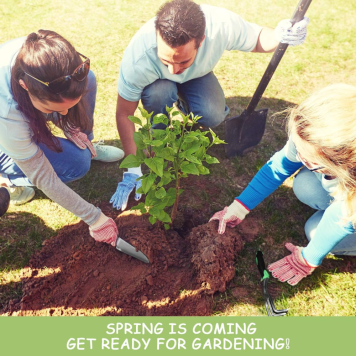
Every garden story begins with the right tool
Imagine walking into your grandmother's garden. The air is filled with the scent of freshly cut grass, the roses are carefully trimmed to perfect shapes, and the flower beds are ready for the new season. Everything looks like something out of a catalog. Are you wondering how she did it? The answer is simple – years of experience and, above all, the right garden tools that have served her faithfully every season.
A garden is not just a piece of land. It is a living organism that requires care, patience and, most importantly, quality tools . Without them, working in the garden is unnecessarily strenuous, time-consuming and the results never reach what they could be. If you have ever tried to dig hard soil with a cheap shovel, you know exactly what we are talking about. The handle bends, the blade twists and after an hour of work you have finished a quarter of what you planned.
That's why we've put together this complete guide to garden tools - so you know what to buy, why to buy it, and how to get the most out of it. Whether you're a beginner starting your first garden or an experienced gardener looking for new tips, this article is for you.
Basic types of garden tools
🌿 Garden rake
Rakes are among the most commonly used tools. They are used for:
- land leveling
- collection of leaves and grass
- lawn preparation
Wide models are ideal for larger areas and narrow ones for detailed work.
✂️ Garden shears
They are used for:
- pruning
- shrub trimming
- plant shaping
Quality scissors will ensure a clean cut and healthier plant growth.
🪴 Garden shovels
Irreplaceable for:
- planting plants
- transplanting
- working in flower pots
Compact and precise – ideal for detailed work.
🌱 Lawn care tools
These include:
- aerators
- leveling rake
- topdressing tools
They help maintain a dense and healthy lawn free of moss and compaction.
Why are quality garden tools really important?
You might be thinking, "It's just a rake or a shovel, what does it matter?" It does. And much more than most people think.
Quality garden tools affect several key areas:
⏱️ Time and efficiency
A good tool will allow you to do the same job twice as fast. Sharp pruning shears will cut a branch in one go, while dull ones will take you five tries. A quality rake will catch every leaf in one go, while cheap models will leave half of it behind. Time in the garden is precious – invest it wisely.
💪 Physical exertion and back health
Gardening is a physically demanding activity. Ergonomically designed tools with longer handles and the right shape significantly reduce the strain on your back, shoulders and knees . This is not a luxury – it is a necessity, especially if you spend long hours in the garden or if you have musculoskeletal problems.
Think of gardening tools as shoes. You can wear cheap sneakers, but your feet will hurt after walking all day. Quality shoes with arch support are a completely different experience. It's the same with gardening tools.
🌱 Plant health
This is something that many people underestimate. Blunt or poor-quality scissors tear plant tissue instead of cutting it cleanly. Such wounds are an entry point for diseases, fungi and pests. A good, clean cut will heal quickly and the plant will handle it without complications.
💰 Long-term economics
Cheap tools break, rust and end up in the trash after one season. High-quality garden tools made of stainless steel can last for decades if you take care of them properly. In the long run, investing in quality is significantly cheaper than constantly buying cheap replacements.
Basic types of garden tools: What should not be missing in any garden
🌿 Garden rakes - the basis of every gardening equipment
A rake is probably the first tool most people associate with the garden. And rightly so – it is one of the most versatile gardening tools there is.
What are rakes for?
- Leveling the soil after plowing or loosening - without a rake, the bed would look like a lunar landscape
- Collecting leaves and grass - every fall, a rake will become your best friend
- Preparing the lawn for sowing or seeding - evenly spreading the substrate is almost impossible without a rake
- Removing stones and clods – it is important to have the soil clean and even before planting
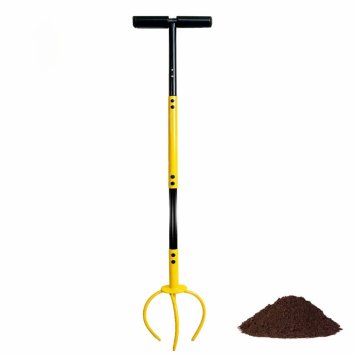
- Spreading compost or mulch over the bed
There are a few things to consider when choosing a rake. The width of the head determines what areas the rake is suitable for. Wide models (40 cm and up) are great for large lawns and flower beds, while narrow versions (15–20 cm) are good for working between plants or in tight spaces.
The material of the tines is also important. Steel tines are durable and long-lasting, but they are heavier. Plastic rakes are lighter, but they can bend or break when used for rough work. For most gardeners, steel with a rust-resistant finish is the ideal choice.
An interesting tip from experienced gardeners: keep your rake clean and dry . Rinse it with water after each use and let it dry. Once a year, oil it and check the tightness of the screws. This way, it will last you for decades.
✂️ Garden shears – precision that determines the beauty of the garden
Garden shears are a tool where quality really matters. The difference between cheap and premium scissors is the same as the difference between a haircut from an amateur and a professional hairdresser. The result is visible immediately.
Types of garden shears:
One-handed pruners are designed for cutting thinner branches up to a diameter of approximately 2–3 cm. Ideal for roses, fruit trees and ornamental shrubs. They come in two basic designs:
- Bypass secateurs – two blades pass past each other like scissors. The result is a clean, precise cut, ideal for live plants.
- Anvil pruners – one blade strikes a solid surface. More powerful, but can tear tissue. Better suited for dry or dead wood.
Two-handed garden shears are designed for cutting hedges, larger shrubs and shaping garden plants into geometric shapes. Longer handles allow you to work without having to bend over and reach higher parts of shrubs.
Telescopic garden shears are a revolution in gardening. The adjustable handle length allows you to cut even high branches without a ladder. You save time, effort and above all safety - working on a ladder with sharp tools has never been ideal.
The golden rule for pruning shears: Never prune wet plants. Moisture causes the blades to stick and the cut to be less clean. And sharpen your shears regularly – a sharp tool is safer than a dull one because you don’t need to apply excessive pressure.
🪴 Garden shovels – small but irreplaceable
A garden spade is like a surgeon's scalpel - small but incredibly powerful when used correctly. These compact tools are an absolute must for detailed gardening work .
Uses of garden shovels:
- Planting seedlings – accurately digging a hole of the correct depth and width
- Transplanting flowers – gentle work with the root ball without damaging the plant
- Working in flower pots and boxes – where a larger shovel simply won't fit
- Mixing substrate and fertilizers directly in the bed
- Filling holes after planting or transplanting
A quality garden spade should have a forged steel blade (not pressed - it bends easily) and an ergonomic handle made of wood or high-quality plastic with a non-slip surface. Some models have a depth scale marked on the blade , which is incredibly practical when planting bulbs, where accurate planting depth is key.
For gardeners who spend a lot of time on their knees, we also recommend investing in an ergonomic garden mat . Your knees will thank you.
🌱 Lawn care tools - for a green carpet without compromise
A beautiful lawn is no accident. It is the result of regular care and the right tools to maintain it . Many gardeners focus on mowing, but a lawn needs much more.
Lawn aerator (aerator)
The soil under your lawn becomes compacted over time – from rain, foot traffic and the sheer weight of the lawn. Compacted soil prevents air, water and nutrients from reaching the roots, leading to yellowing, balding and the spread of moss.
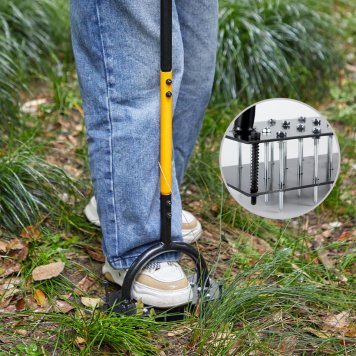
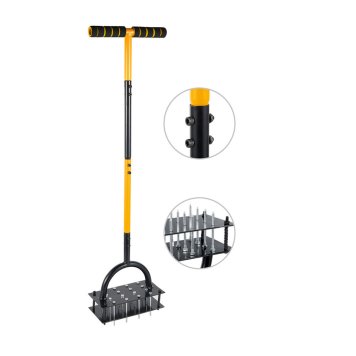
A lawn aerator punctures the soil and creates small holes through which air and water can flow freely. The result is visible after just a few weeks - the lawn begins to thicken, turn green and become more resistant to drought and disease.
We recommend performing aeration at least once a year, ideally in spring or early autumn .
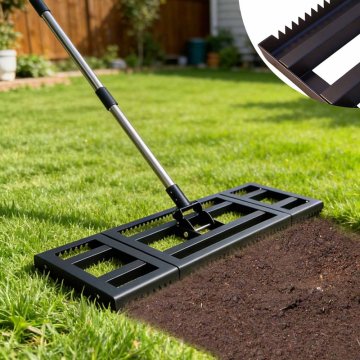
Leveling rake for topdressing
Topdressing – applying a thin layer of sand or substrate to a lawn – is a technique used by professional golf course managers and gardening enthusiasts alike. It helps to even out unevenness, improve drainage and encourage dense grass growth.
To evenly spread the topdressing mixture, you need a special flat rake with long teeth that gently spreads the material without damaging the lawn.
🔧 Other garden tools and accessories - a garden needs more than just the basics
You have the basic tools, but the garden also requires additional tools , without which everyday work would be unnecessarily complicated.
Garden gloves – an underrated but important accessory. They protect your hands from sharp thorns, chemicals, and bacteria in the soil. Good quality gardening gloves should be firm on the palm but flexible on the fingers to maintain sensitivity for delicate work.
Garden apron with pockets - small at first glance, but when you always have seeds, labels, or small tools at hand, you'll appreciate every pocket.
Garden hose holders – properly storing a hose is a mystery that many gardeners have been solving for years. A quality holder will extend the life of the hose and prevent it from twisting and cracking.
Nets for drying fruit, mushrooms or herbs – if you have a garden with fruit trees or an herb garden, garden drying nets are an absolute must. They allow for natural air drying, preserving the taste, aroma and nutrients. Apples, pears, apricots, but also lavender or mint – everything can be dried hygienically and efficiently.
How to choose the right garden tools: A practical step-by-step guide
1. Assess your garden
Before buying, ask yourself a few questions:
- How big is my garden? A small patio vs. a large plot require completely different tools.
- What type of garden do I have? Lawn, vegetable, ornamental garden or a combination?
- What is my physical condition? People with back problems should invest in ergonomic tools with a longer handle.
2. Focus on the material
Steel (stainless or galvanized) is the king of garden tools. Tough, durable, and easy to maintain. Look for labels like high-carbon steel or stainless steel .
Aluminum is a great alternative for lighter tools – much lighter than steel, but less durable for heavy-duty work.
Plastic is suitable for lightweight garden accessories, but avoid it for tools that must withstand mechanical stress (digging, raking).
Wood on handles is a classic – pleasant to the touch, absorbs vibrations and, with proper care, lasts for decades. An alternative is fiberglass , which is even more durable and maintenance-free.
3. Ergonomics is not a luxury
Gardening is a physically demanding activity. Ergonomically designed tools can significantly reduce the risk of injury and pain. Search for:
- Anti-slip surfaces on the handles
- Handle shape adapted to the anatomy of the hand
- The right length – a tool that is too short forces you to bend, one that is too long is difficult to control
4. Think about specific uses
Garden tools are specialized. There is no one tool that can do it all. Buy the right tool for each specific job and the results will surprise you.
Tips for working in the garden more efficiently
Plan your work according to the weather. Digging wet soil is much easier than dry soil, but cutting wet plants is not ideal. Learn to read the garden and time your work.
Work in the right order. First dig and level the soil, then plant, and finally water. The right order saves time and prevents unnecessary trampling on freshly prepared soil.
Clean and maintain your tools regularly. Remove dirt and moisture from your tools after each use. Once a season, oil metal parts and check that all screws and connections are tight. Sharpen sharp tools regularly – blunt tools are not only ineffective, but also dangerous.
Combine multiple tools. A great gardener knows that one tool is not enough. A combination of rake, shovel and shears will allow you to tackle any gardening challenge.
Invest in a storage system. Properly stored tools are easier to find, last longer, and your garden shed won't look like a junkyard.
The most common mistakes when choosing garden tools
❌ Buying the cheapest tools available This is a classic trap. Cheap tools are tempting with their low price, but after one season they end up in the trash. You buy again every time and end up spending more than if you had invested in quality in the first place.
❌ Choosing the wrong size Too small a rake for a large lawn = unnecessarily long work. Too large a shovel for working in a flower pot = impossible to maneuver. The size of the tool must correspond to the specific use.
❌ Ignoring ergonomics Back, shoulder, and wrist pain after gardening is not the norm – it's a sign that you're using the wrong tools. Ergonomics pays off.
❌ Neglecting maintenance Even the best quality tools will rust and dull if left unattended. Regular maintenance is the key to a long service life.
❌ Buying everything at once Beginners often buy huge sets of tools, half of which they never use. Start with the basics and add to them according to your real needs.
Conclusion: Your garden deserves the best – and so do you
A garden is a place of relaxation, creativity and connection with nature. It is a space where you can forget about everyday stress, where children discover the wonders of nature and where every day brings something new – a new flower, a new fruit, a new flower bed.
But to make gardening a joy and not a burden, you need the right helpers. Quality garden tools will allow you to work faster, more efficiently and with better results – and most importantly, with a smile on your face, not a sore back.
Remember: a good gardener is not the one with the biggest garden, but the one who knows the right tools and knows how to use them. An investment in quality tools will pay off many times over – in time, results and, above all, in the joy your garden will bring you.
👉 Check out the complete range of garden tools and accessories at cabshop.eu - you'll find everything your garden needs, from basic tools to specialized tools for demanding gardeners. And if you're looking for a practical accessory for a garden with fruit trees, don't forget to check out the nets for drying fruit, mushrooms or herbs - the perfect way to use every fruit of your gardening work.
Happy gardening! 🌿